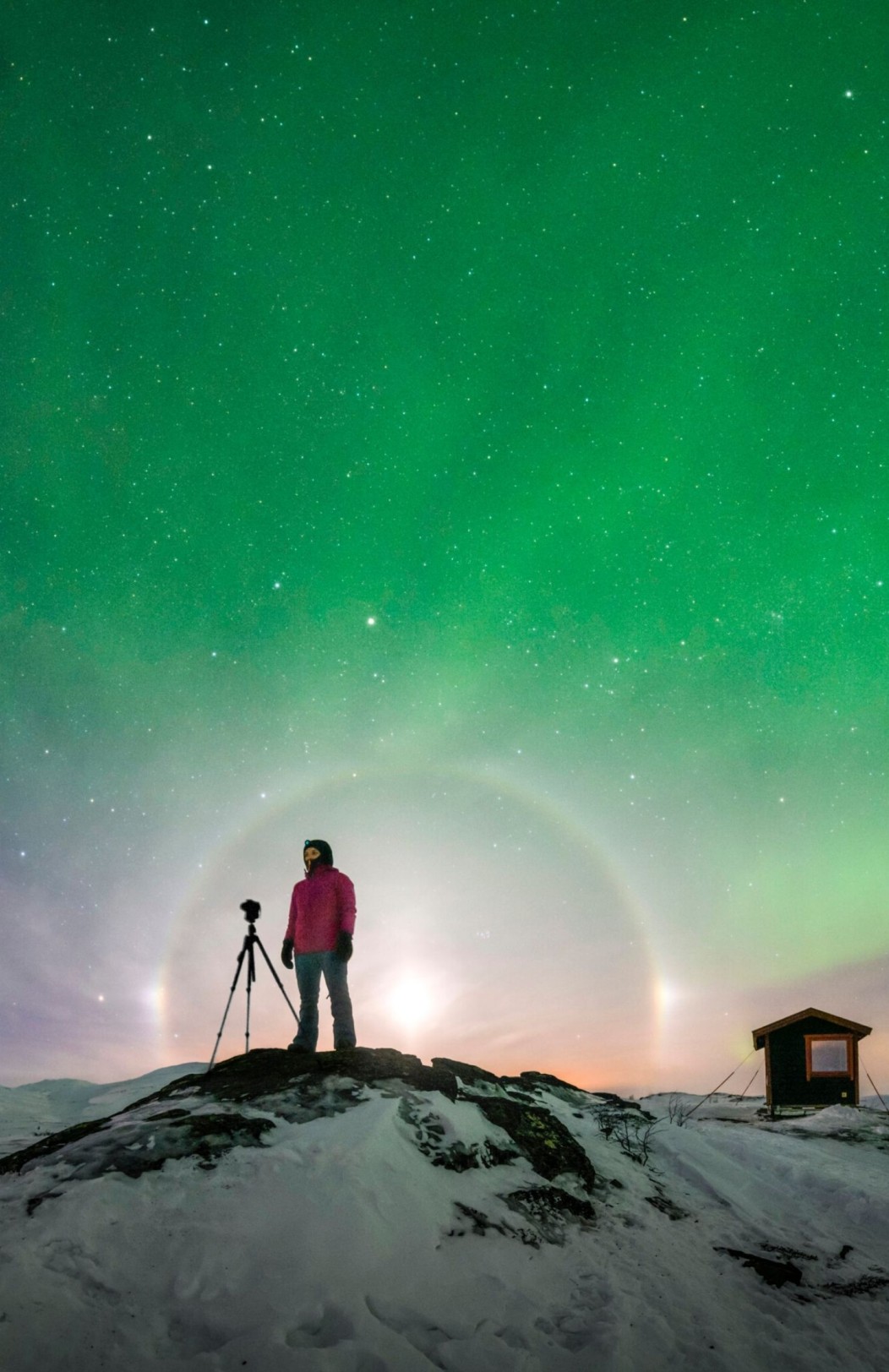

The Northern Lights, or aurora borealis, are a natural phenomenon in which vivid ribbons of light shimmer across the night sky. Although the aurora can be seen in other parts of the world, the displays in the Nordic Arctic region are by far the most spectacular, thanks to the high frequency of aurora activity, long dark winter nights and lack of light pollution.
.png)

"The most spectacular Northern Lights display I ever saw looked like someone was spilling gigantic buckets of green and purple paint across the sky. My neck was sore the next day".


Here’s what you need to know to plan a winter holiday of a lifetime – and finally tick the Northern Lights off your bucket list.
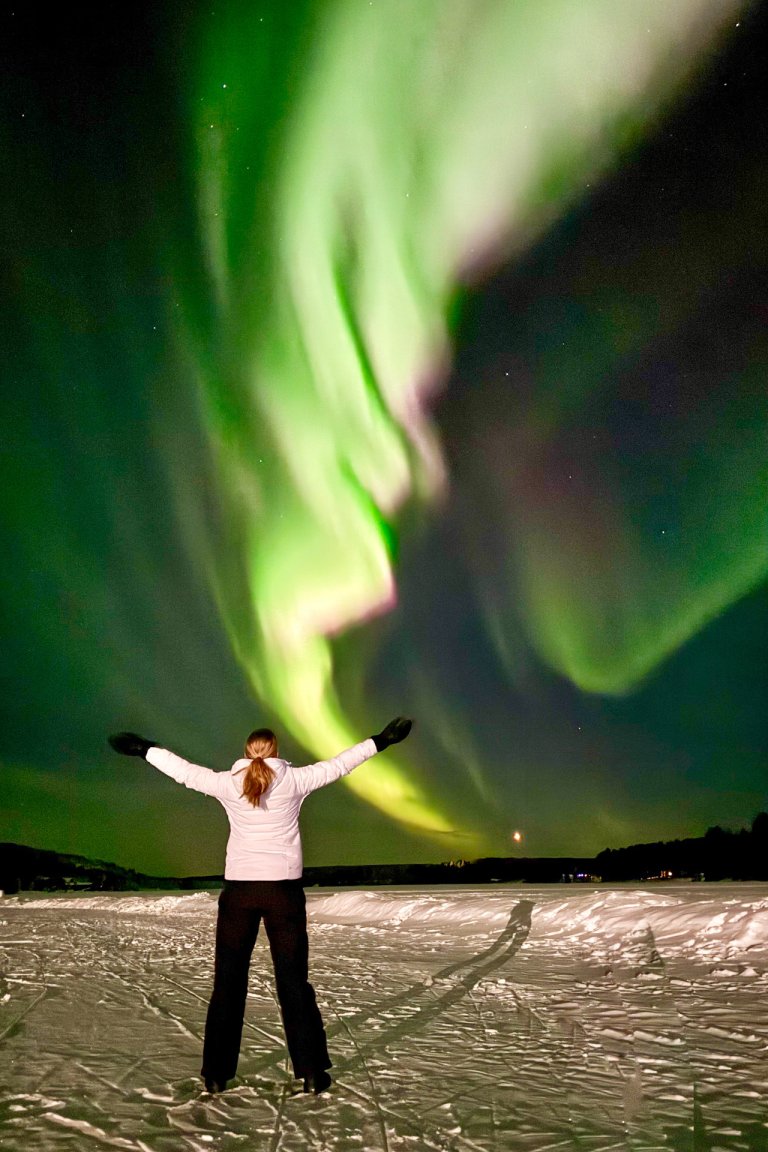
Seeing the Northern Lights illuminate the night sky is often described as a mesmerising and even euphoric experience. Watching their lifelike dance sparks the imagination and makes you get lost in the moment. What’s more, the appearance of bright, beautiful lights on a cold, dark night can evoke a profound sense of comfort and peace. Their unpredictable nature makes a sighting feel like a gift.
The sheer size of the aurora across the sky can also put our own existence into perspective – both our small place in the vast universe as well as in human history. They invite us to imagine how people centuries ago must have felt to see such an extraordinary spectacle…
Traditionally, the indigenous Sámi people believed that the lights were the spirits of departed ancestors. And according to Finnish folklore, the aurora is said to be the fiery tail of a mythical fox – the tulikettu – which gives us the modern Finnish word for Northern Lights: revontulet (‘fox’s fire’).
Thanks to modern science, we know that the Northern Lights are caused by the sun emitting particles that are directed towards the North Pole by the Earth’s magnetic field. These react with the Earth’s atmosphere, producing light that is typically green, but may also be purple, pink, blue or red.
Our travel specialists can help you customise a tour to create your dream holiday.
Need some help planning your trip?
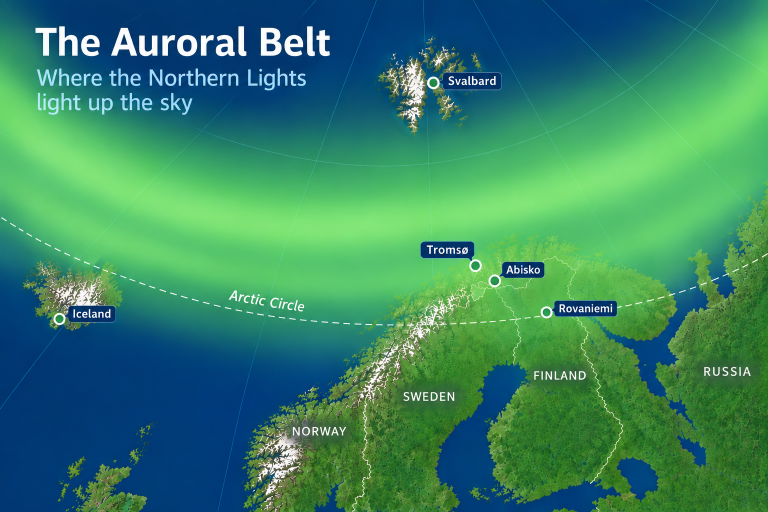
All our Northern Lights holiday destinations in northern Norway, Swedish and Finnish Lapland and Iceland are located near the so-called ‘auroral belt’ – a geographic ring that runs through the Nordic Arctic region. This belt lines up roughly with the Arctic Circle and is where most aurora activity occurs. Here are some of the most unique attractions per region for Northern Lights enthusiasts.
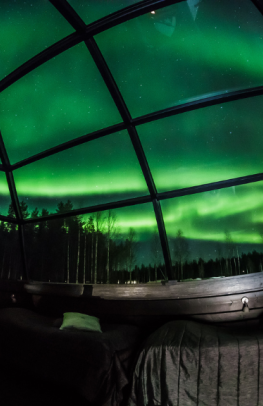
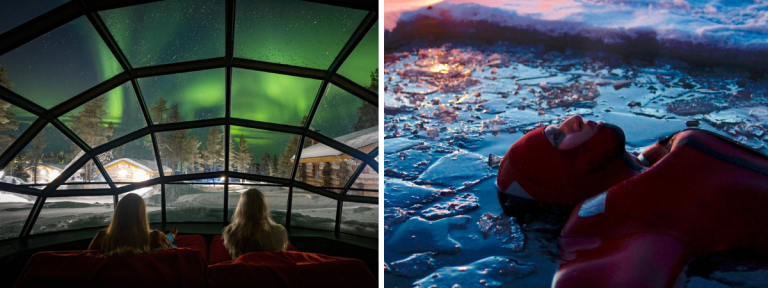
This is the place to go if you want to stay in an aurora cabin or glass igloo. The panoramic sky view is perfect for marvelling at Northern Lights displays from the comfort of a warm bed! We recommend letting someone else do the waiting and using the aurora alert service wherever offered.
Another way to enjoy a sky view in Finland while lying down is to try Northern Lights ice floating. Combine sky watching with the peaceful, relaxing feeling of floating in an Arctic lake (with a thermal rescue suit, of course!).
Explore our Northern Lights tours in Finland.
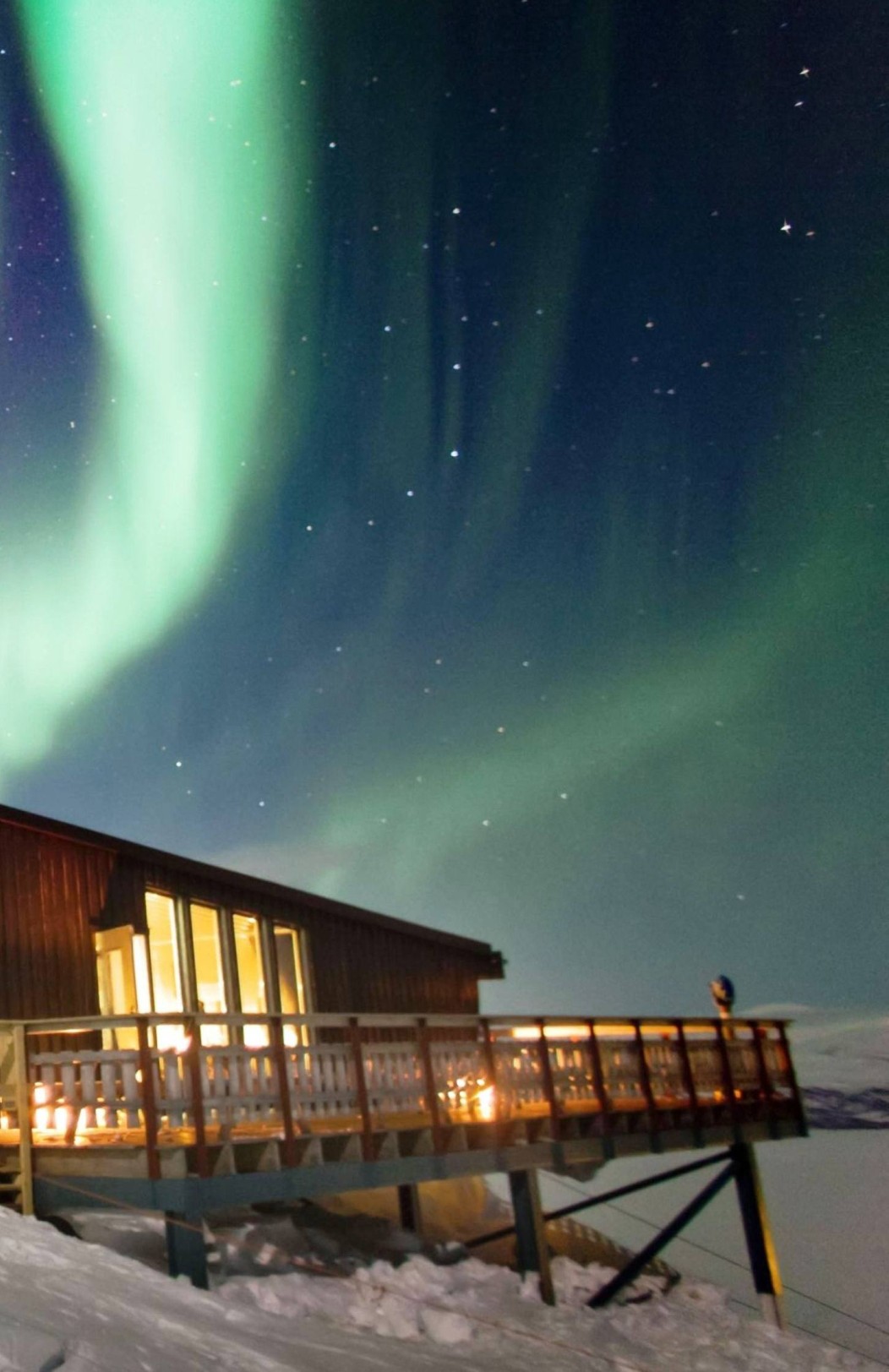
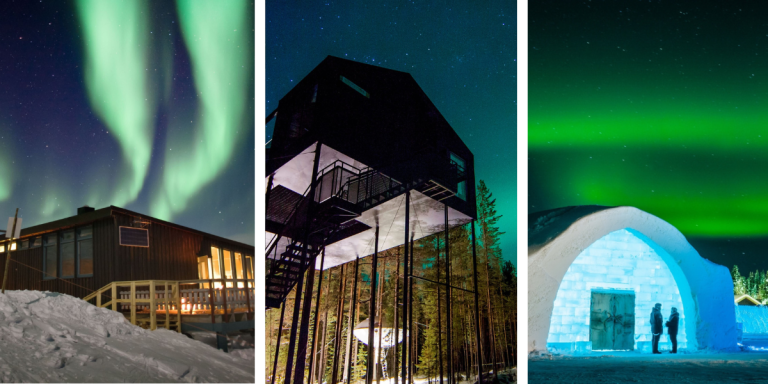
The Aurora Sky Station in Abisko is widely regarded as one of the best places in the world to see the Northern Lights, thanks to its remote mountaintop location, expansive views and some of the most favourable weather conditions in the region.
For a one-of-a-kind night sky views from the treetops, we recommend a visit to the Treehotel.
And of course, no trip to Swedish Lapland is complete without a visit to the world's first ice hotel.
Explore our Northern Lights tours in Sweden.
The dramatic fjord coast – besides being stunning in itself – offers excellent, unobstructed sky views. Local guides in this region specialise in Northern Lights chases that bring you to the best remote mountain lookout points, away from light pollution.
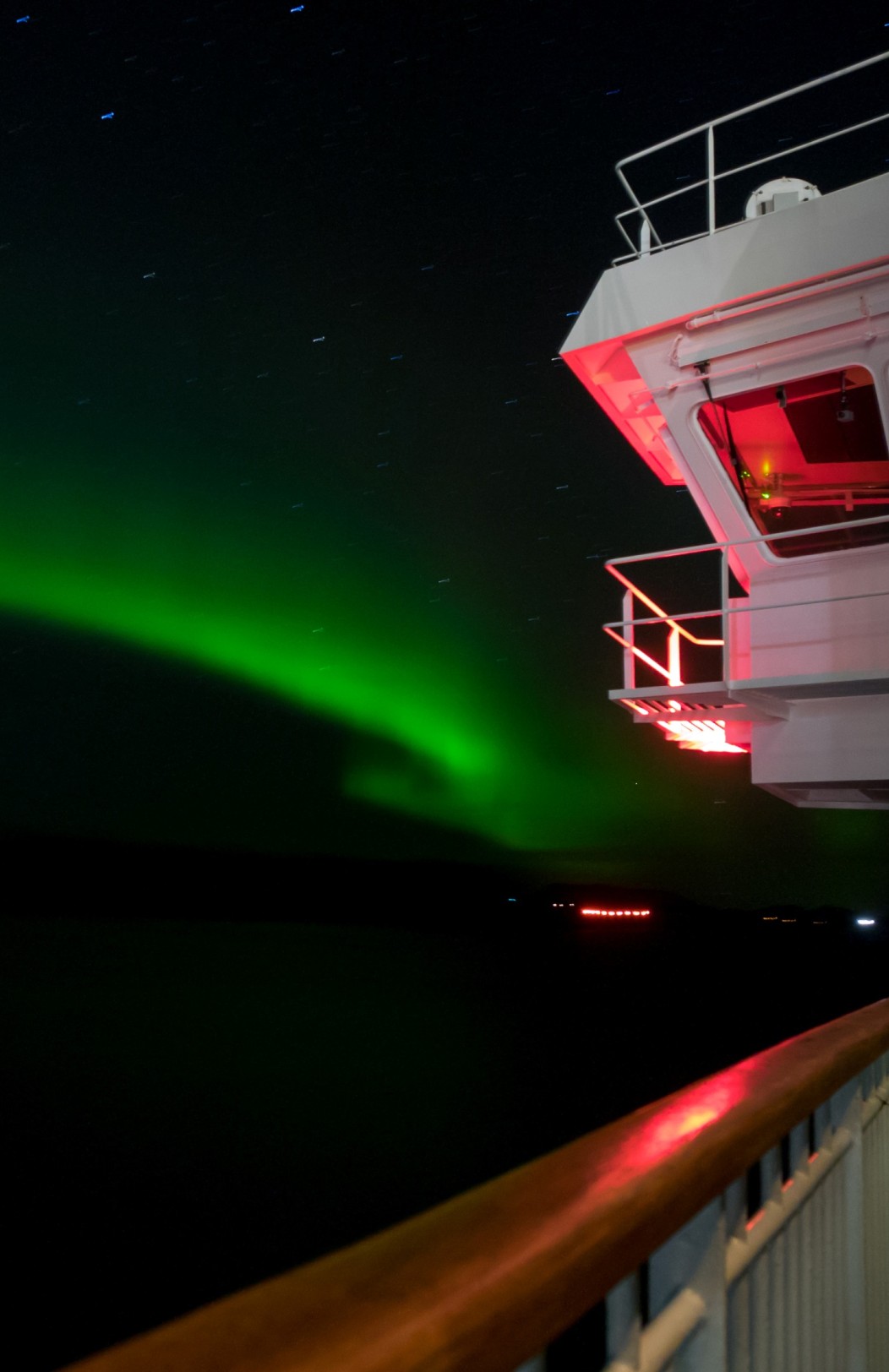
For outstanding viewing conditions at sea, Norway is also home of the Norwegian coastal voyage. Both cruise companies – Hurtigruten and Havila – offer aurora alert services so you won’t miss a sighting, no matter when the lights appear. What's more, they offer a Northern Lights guarantee (valid for round-trip Bergen–Kirkenes–Bergen only). If the lights don't make an appearance, you can book another 6- or 7-day voyage – free of charge!
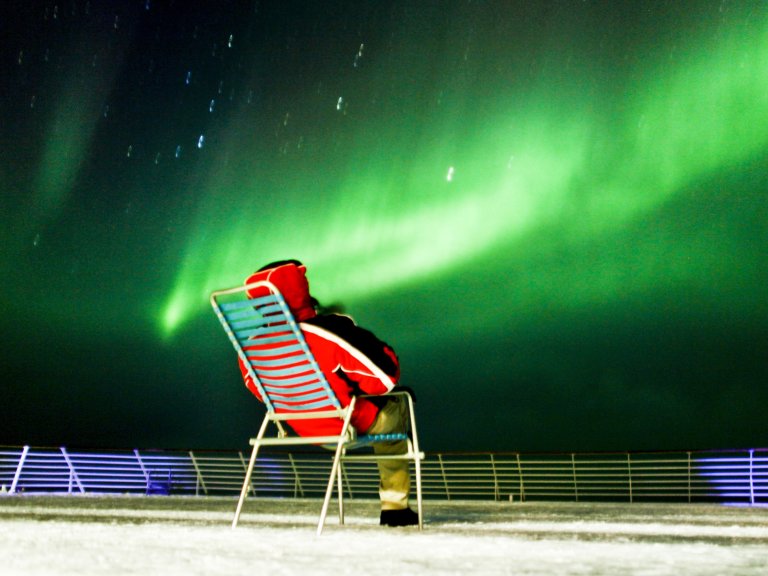
Longyearbyen, Svalbard is located north of the Norwegian mainland. Although it is not directly in the auroral belt, it has the longest polar night – a period between November and January where the sun does not rise above the horizon at all, and it is possible to see the Northern Lights even during the ‘day’.
Explore our Northern Lights tours in Norway.
The best views of the Northern Lights of Iceland are in the more remote coastal areas away from light pollution, where you can also explore fascinating and otherworldly volcanic landscape.
Explore our Northern Lights tours in Iceland.
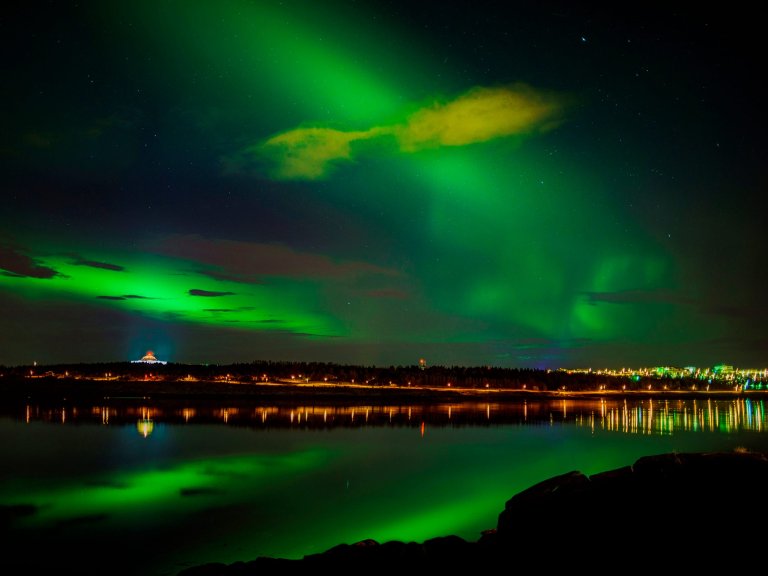
For every destination, we have carefully put together customisable itineraries with excellent accommodation, seamless transport and activities with trusted local partners designed to maximise your chances of seeing the Northern Lights. Learn more about the different Arctic Nordic destinations.
There is no single best time to see the aurora in the Arctic. They appear regularly from September until April, and the early, middle and late seasons offer different possibilities. When choosing a date for your Northern Lights holiday, consider the following factors:
Shorter days mean more darkness and longer night viewing conditions. The period from November to February is the darkest, with days closest to the solstice in late December being the shortest of the year. Whether a place experiences some daylight, only twilight or the true polar night – when the sun doesn’t rise at all above the horizon – depends on the exact location and date. Depending on what else you want to experience, you may wish to optimise for extra daylight hours in the early or late season.
Snow cover reflects light and can intensify the aurora viewing experience. If you want to take part in snow-dependent activities while Northern Lights hunting, such as snowshoeing, dog sledding, snowmobiling or reindeer sledding, book your trip between late December and March. Keep in mind there is a trade-off between night sky visibility (clear) on the one hand and getting to experience fresh snowfall (clouds) on the other.
For an aurora experience without the snow, we also offer autumn tours in September and October.
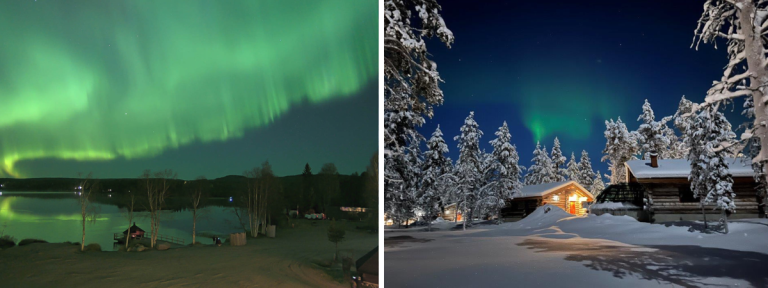
There is regular aurora activity throughout the winter, but it is most frequent around the autumn and spring equinox (late September and late March) – the very beginning and end of the winter season.
One challenge of Arctic winter travel is availability: space is limited, and popular destinations and Northern Lights activities tend to fill up early, especially around Christmas, New Year’s and much of February (school holiday season), so early booking is recommended. When you travel outside of this peak season, you can enjoy greater flexibility, especially if you’re planning a last-minute getaway.
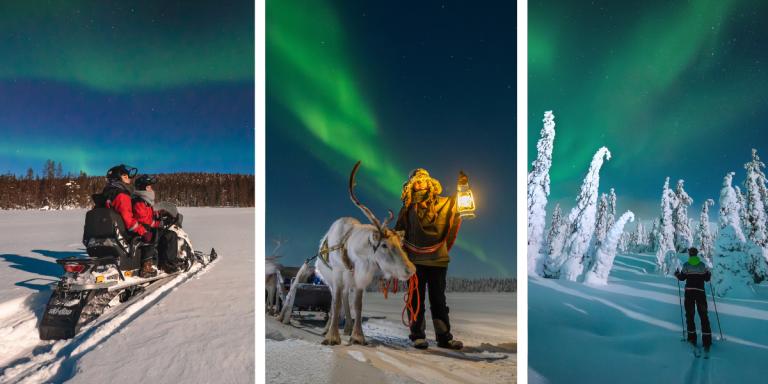
Spend time outdoors in the evening, preferably in remote areas with little light pollution. But don’t just stand around waiting: This is the perfect time to try traditional winter activities! Spend time at a Sámi farm, where you can help feed gentle reindeer and learn about herding traditions. Meet an eager husky team and embark on a thrilling dog sledding excursion. Go on a cosy horseback ride through the deep snow. Travel by snowmobile over the scenic landscape to remote lookout points for incredible stargazing. To get your blood pumping, go on a snowshoe hike through the nocturnal winter wonderland...
If you prefer a slower pace, we recommend a Northern Lights chase by car or bus. Local guides who are experienced in reading the weather will take you to the best viewing spots according to that evening’s conditions. You can often enjoy warm drinks and snacks around a warm bonfire while learning about local folklore and history. The guide will also give you tips on how to best capture the lights in photos.
Another idea if you want to take it easy: An evening aurora dinner cruise lets you relax and enjoy a delicious meal and glass of cheer on board a warm ship, while keeping an eye out for the Northern Lights through panoramic windows against the backdrop of stunning fjord scenery.
Our Northern Lights tours are customisable, so you can add optional daytime and evening excursions according to your interests and tastes.
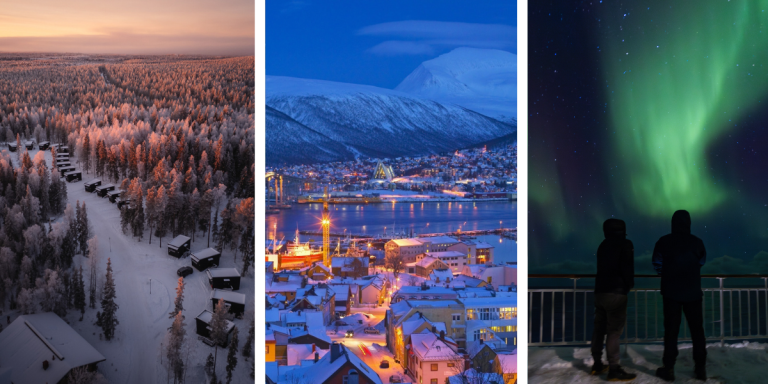
Remote wilderness resorts are perfect for those seeking a more tranquil experience, far away from crowds and light pollution, and with activities offered on site. Many places offer unique winter accommodation, such as glass igloos, log cabins or snow rooms at ice hotels.
Arctic cities and small towns offer urban comforts like shopping, restaurants, cultural attractions and museums, but are located within easy reach of remote areas that are ideal for Northern Lights excursions and outdoor adventures.
Winter cruises in northern Norway let you experience a variety of striking coastal landscapes and charming destinations along the route, in addition to outstanding Northern Lights viewing opportunities on board. Shorter or longer stretches are possible, or as part of a longer combination tour. Explore our Norway winter cruises.
Our multi-country winter tours let you discover multiple regions, types of unique accommodation and activities in one trip, for a more varied Arctic experience. Explore our multi-country winter tours.
It is important to dress warmly: the longer you can be comfortable outside, the greater your chances of a sighting. Keep in mind that clearer nights that are best for viewing tend to be colder. Here are best tips for dressing for the cold:
Dress in layers that aren’t too tight, leaving room in between for air to warm up and insulate you:
Base layer: long wool underwear.
Middle layer: medium-weight sweater and trousers.
Outer layer: thermal, windproof jacket and snowpants or snowsuit.
Mittens are usually better than gloves, as this lets the fingers warm each other. Use hand warmers for extra comfort if your hands tend to freeze.
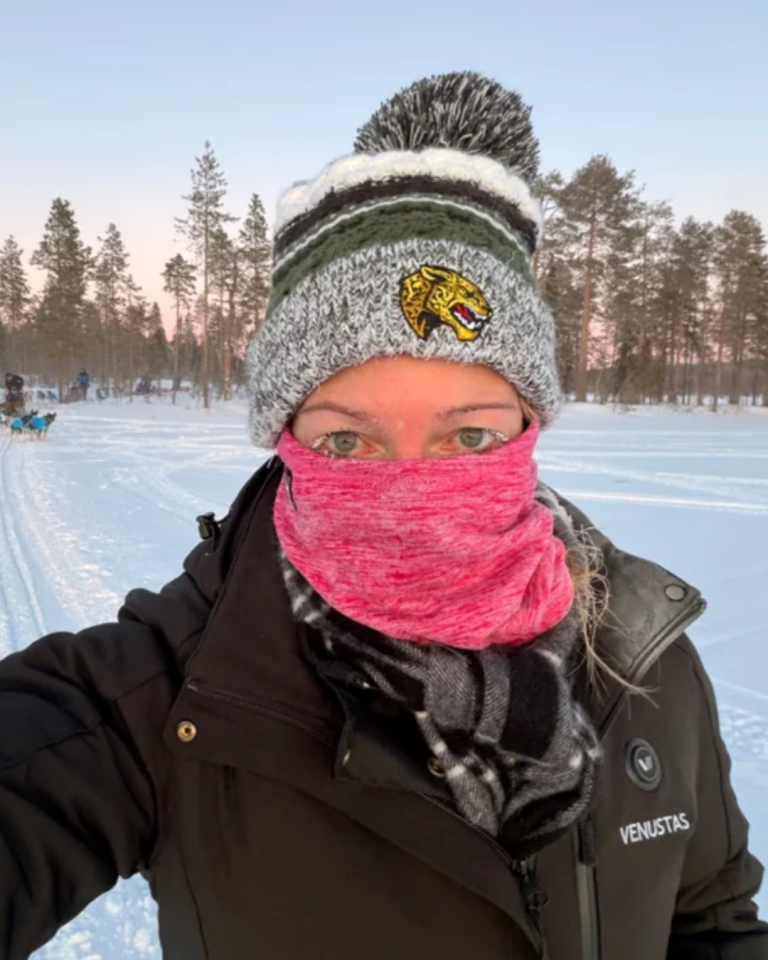
Wear a scarf or neck gaiter to warm your neck and a good hat that covers your ears. In extreme cold or windy conditions, a balaclava (or ski mask) helps protect your face.
Aquaphor or an oil-based moisturiser will help protect your lips and skin from the cold, dry air.
Wear two pairs of socks – first a thinner wool pair for breathability, then a thicker pair for added warmth. You may want to size up in winter boots so that they are not too tight and there is enough space for air to have an insulating effect.
Some resorts and activities will provide thermal snowsuits, boots, mittens, etc. This will be clearly indicated in the description of the tour/experience.
Also refer to our Lapland packing guide and FAQ section on dressing for winter.
If you want to see the Northern Lights, we suggest staying three nights at a minimum, which is the duration of most of our short winter breaks. However, a week or longer will significantly increase your chances of Northern Lights sightings, as this allows for changing weather conditions and fluctuating solar activity.
For a longer stay, we recommend one of our multi-country winter tours to let you experience a broader range of stunning landscapes, unique accommodation and outdoor activities – all in top aurora viewing locations.
The appearance of the Northern Lights depends on solar activity, a cloudless sky – and a bit of luck, so sightings are never guaranteed. Their unpredictability is part of the magic, but being patient and taking the above tips into account will maximise your chances of seeing them.
Remember: Arctic winter holidays offer many unique, once-in-a-lifetime experiences besides Northern Lights sightings: the contagious pre-run excitement of a husky team, the fresh Arctic air, the thrill of zooming through the wilderness on a snowmobile, the magic of new fallen snow, the serenity of the frozen landscape... We strongly recommend taking part in activities you can enjoy for their own sake. That way, an aurora sighting feels like icing on the cake, rather than the one and only goal of the trip.
Explore our Northern Lights tours.
Our travel specialists can help you customise a tour to create your dream holiday.